Quick answer
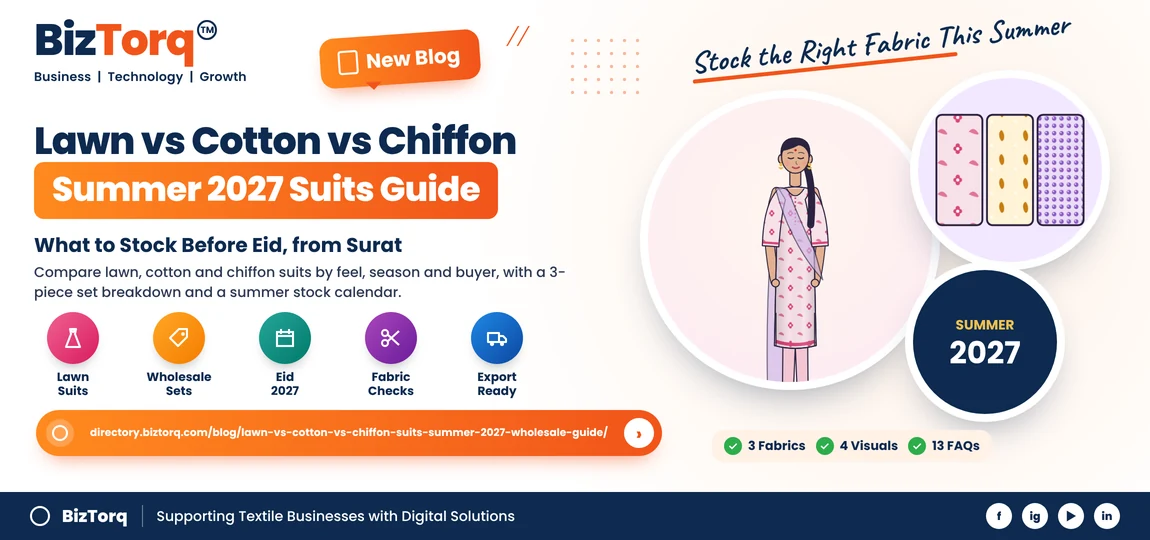
Lawn is a fine, lightweight plain-weave cotton with a high thread count, so it is cool, takes sharp prints and is the summer best seller for daywear suits. Cotton suits, usually in cambric or poplin, are a little heavier, more opaque and easy to wash, so they sell all year as everyday basics. Chiffon is sheer, light and flowing, usually polyester in wholesale, and is used for dupattas and Eid or party wear. Many best-selling summer sets mix them: a printed lawn shirt, a chiffon dupatta and a cotton trouser. For summer 2027, book catalogues in December and January, because Ramadan is expected to start around 8 to 9 February and Eid al-Fitr around 9 to 10 March 2027.
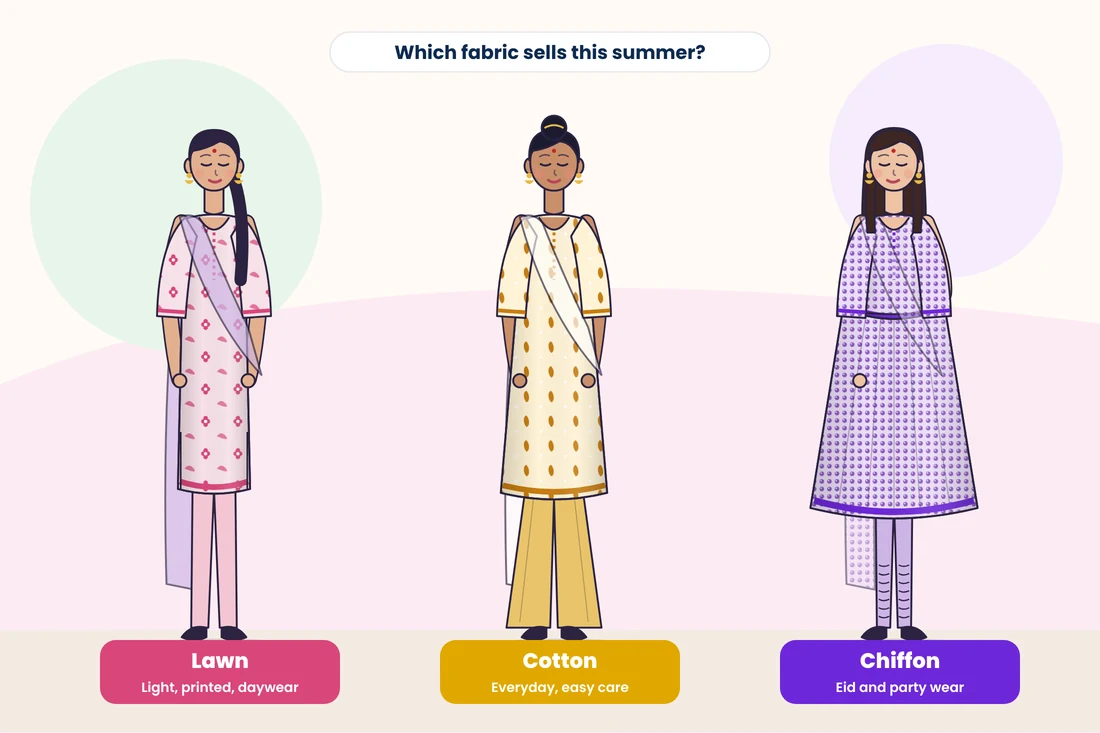
Every December, resellers, boutique owners and online sellers face the same question: how much lawn, how much cotton and how much chiffon to stock for summer. Get it wrong and you are left with heavy cotton in May or party chiffon that never moved after Eid. This guide compares the three fabrics the way a buyer needs: how they feel, who buys them, how to check quality, what is in a 3-piece set and when to order.
It covers Indian-made Pakistani-style suits and Indian summer suits sold through wholesale markets in Surat and Ahmedabad. Goods from Pakistan cannot be imported into India; see can you buy original Pakistani suits in India for the rule.
Contents
- Lawn vs cotton vs chiffon at a glance
- Lawn: the summer best seller
- Cotton: the year-round basic
- Chiffon: dupattas and Eid wear
- What is inside a 3-piece set
- How to check quality before you buy
- How to split your summer stock
- Summer 2027 stock calendar
- GST and pricing
- Selling to buyers abroad
- FAQs
Lawn vs Cotton vs Chiffon at a Glance
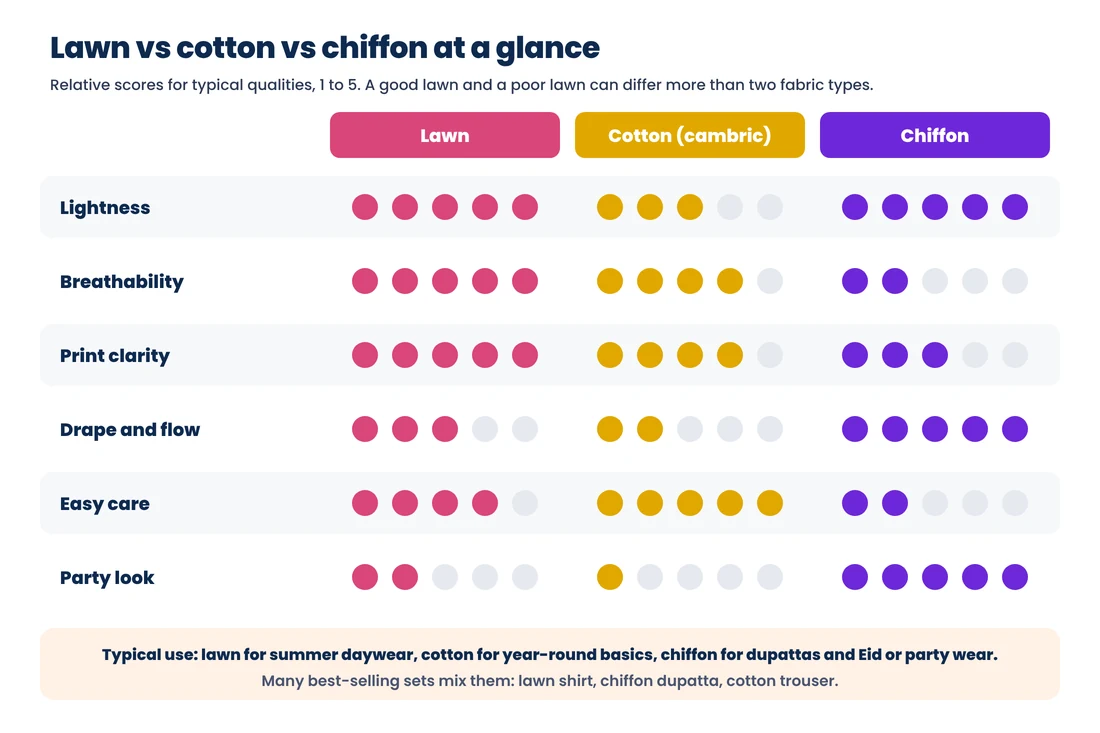
| Lawn | Cotton (cambric, poplin) | Chiffon | |
|---|---|---|---|
| Fibre | Cotton, sometimes blends | Cotton | Usually polyester in wholesale; silk chiffon is rare and costly |
| Feel | Fine, smooth, light, slightly crisp | Firmer, more body, opaque | Sheer, soft, flowing |
| Best season | Peak summer | All year | Evenings, Eid, weddings |
| Prints | Very sharp, detailed prints | Good, slightly softer | Lighter colours; often embroidered or sequinned |
| Lining needed? | Sometimes, for light colours | Rarely | Yes, for shirts |
| Care | Gentle wash, may shrink a little | Easy wash, durable | Gentle wash or dry clean |
| Typical buyer | Office, college, daywear, summer gifting | Everyday home and work wear | Festive, Eid, party and wedding guests |
Lawn: The Summer Best Seller
Lawn is a plain-weave fabric, usually cotton, with a high thread count, typically around 150 to 200, which makes it one of the finest cotton weaves. Lightweight cotton lawns are often around 65 to 80 GSM. That fine, smooth surface is why lawn takes detailed digital and screen prints so well, and why it feels cool in Indian and Gulf summers.
- Strengths: breathable, light, sharp prints, a premium feel at a moderate price.
- Watch for: sheer light shades, some shrinkage, and low-quality "lawn" that is really a loose, rough weave.
- Sells best: March to June for daywear, plus Eid gifting.
Close cousins you will hear in the market: voile (softer and more sheer, often used for dupattas), cambric (a little heavier) and mulmul (very soft, loosely woven cotton).
Cotton: The Year-Round Basic
"Cotton suit" in wholesale usually means cambric, poplin or cotton satin: heavier and more opaque than lawn, with more body. They do not need lining, wash easily and work for home, work and travel all year. Cotton suits are your safe stock. They rarely become dead stock, but they carry less festive appeal and lower margins than printed lawn or embroidered chiffon.
India's cotton printing tradition (block, screen and digital) is strong in Gujarat and Rajasthan, so cotton suits come in a very wide price range. Compare finishing, colour fastness and print registration, not just the price per piece.
Chiffon: Dupattas and Eid Wear
Chiffon is a sheer, light, flowing fabric. In wholesale it is usually polyester chiffon or georgette; Surat, India's biggest centre for synthetic fabrics, makes it in huge volumes. Silk chiffon exists but is far more expensive.
- As dupattas: the most common use, paired with lawn or cotton shirts. A printed chiffon dupatta lifts a plain set into a festive one.
- As full suits: embroidered or sequinned chiffon anarkalis and straight suits for Eid, weddings and parties, usually with an inner lining.
- Watch for: it is hot in peak summer, snags easily and needs careful packing. Party chiffon sells around Eid and weddings, then slows.
For wedding-season timing, see the wedding season 2026-27 stock calendar.
What Is Inside a 3-Piece Set
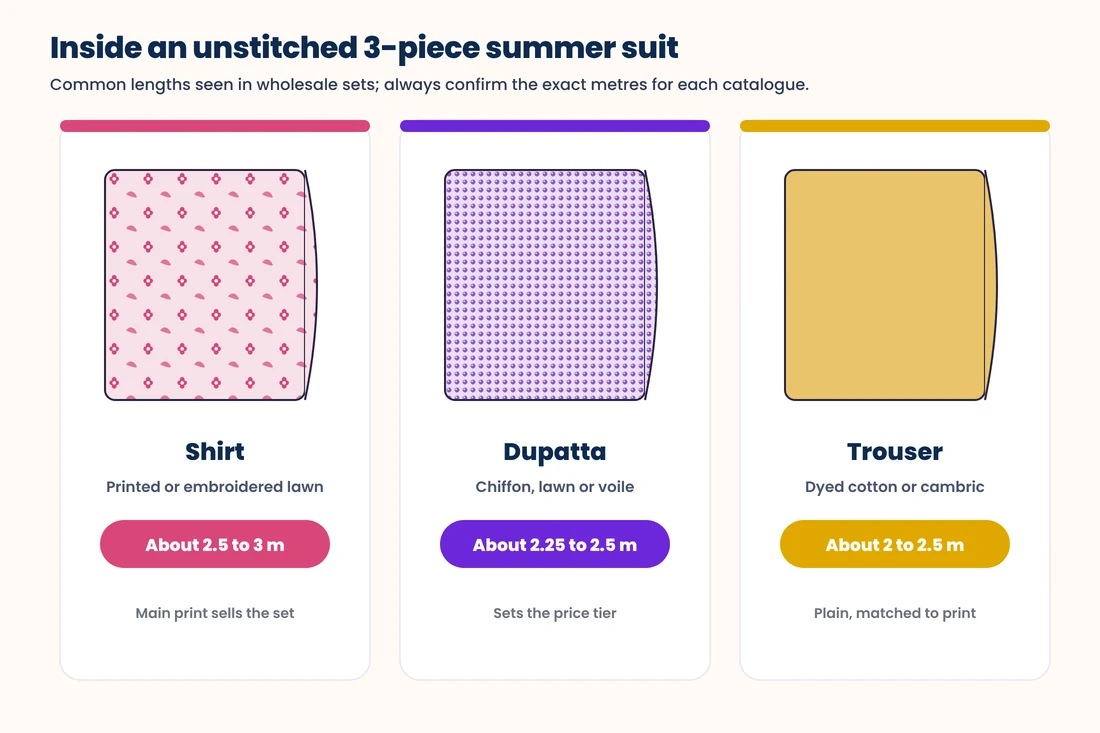
Most summer suits are sold unstitched as 3-piece sets. The fabric of each piece changes the price and the buyer:
| Piece | Common fabric | Common length | What to check |
|---|---|---|---|
| Shirt (kameez) | Printed or embroidered lawn; cotton; chiffon for party sets | About 2.5 to 3 m, sometimes with separate front, back, sleeves and borders | Print quality, embroidery panel size, length enough for long kurtas |
| Dupatta | Chiffon, lawn, voile or net | About 2.25 to 2.5 m | Print matches shirt, edges finished, fabric weight |
| Trouser or salwar | Dyed cotton or cambric | About 2 to 2.5 m | Colour matches print, enough for the style |
Should you stock unstitched, semi-stitched or readymade? See unstitched vs semi-stitched vs readymade suits, and for widths and cuts, the fabric widths and size guide.
How to Check Quality Before You Buy
- Hold it to the light. Good lawn is fine and even; uneven gaps or thick and thin threads mean a poor weave.
- Feel and crush it. Lawn should feel smooth and spring back a little; a harsh, papery feel can mean heavy starch that washes out.
- Check the print. Sharp edges, no colour bleeding between motifs, and the print should match on shirt, dupatta and borders.
- Rub test. Rub a dark area with a damp white cloth; colour on the cloth means poor colour fastness.
- Ask for GSM and composition in writing, especially for "lawn" and "chiffon", which are used loosely in the market.
- Measure the pieces. Confirm metres for shirt, dupatta and trouser match the catalogue.
- Wash one piece from a new supplier before you place a big repeat order.
More checks in the fabric quality guide, and before you pay a new seller, read how to verify a Surat textile supplier.
How to Split Your Summer Stock
There is no single right mix; it depends on your customers. As a starting point for a reseller or boutique selling summer suits, many buyers lean like this, then adjust from their own sales:
| Your customers | Lean towards |
|---|---|
| Office and college women, hot cities | Mostly printed lawn, some cotton |
| Everyday home wear, value buyers | Mostly cotton, some lawn |
| Eid and festive gifting | Lawn sets with chiffon dupattas, plus embroidered chiffon |
| Weddings and parties | Embroidered chiffon and georgette, a small lawn range |
| Online sellers posting new designs weekly | Many lawn designs in small quantities, fast reorders |
Keep the first order small and spread across designs, then reorder what sells. Work out your selling price and margin with the textile margin calculator.
Summer 2027 Stock Calendar
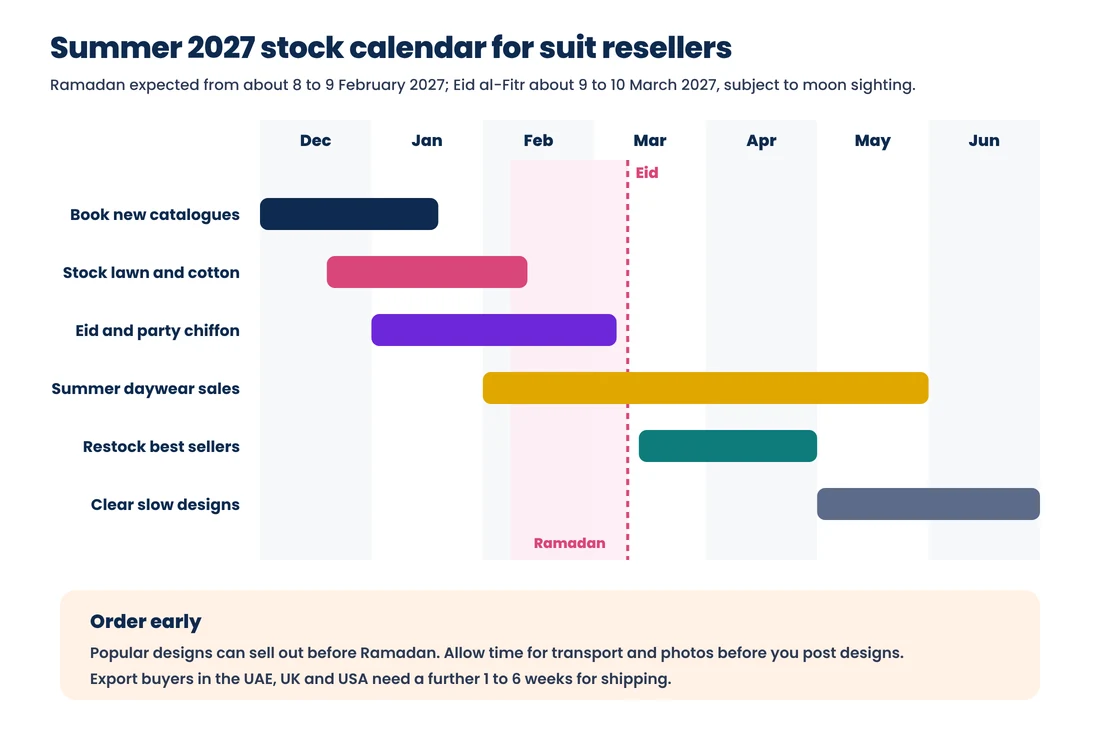
- December to mid-January: visit or contact suppliers, book new summer catalogues.
- January to February: receive lawn and cotton stock, photograph and list designs.
- Ramadan, expected from about 8 to 9 February 2027: Eid buying peaks; have chiffon and festive sets ready before it starts.
- Eid al-Fitr, expected about 9 to 10 March 2027: subject to moon sighting.
- March to May: summer daywear sales; reorder best sellers early.
- May to June: clear slow designs before monsoon stock arrives.
Check market holidays before your trip with Surat textile market holidays, plan transport with the transport and bilty guide, and see the Surat textile market directory for markets and shops.
GST and Pricing
Since 22 September 2025, fabrics, including unstitched suit sets, carry 5% GST. Readymade garments carry 5% when the sale value is up to ₹2,500 a piece and 18% above that. So a stitched premium chiffon suit can fall into a higher GST slab than the same set sold unstitched. Check codes in the HSN and GST finder and read GST on textiles. Confirm your own GST position with your CA.
Prices change every season and depend on fabric quality, print, embroidery and brand; ask several suppliers for current rates per piece and per set, and read how Surat wholesale pricing works.
Selling to Buyers Abroad
Indian-made Pakistani-style and Indian summer suits sell to South Asian communities in the UAE, UK, USA, Canada and Australia, with the same Eid timing, so export orders need to ship weeks earlier. Things to plan:
- Ship early: air takes days, sea takes weeks; see FOB vs CIF vs DDP.
- Labels: fibre content and "Made in India" are required in several markets; see clothing label requirements.
- Duty: estimate with the export duty calculator.
- UAE focus: read selling Indian ethnic wear in the UAE.
- Your own designs or label: factories in Surat and Ahmedabad can make custom sets in small runs through BizTorq make-to-order.
Never call Indian-made suits "original Pakistani" or use Pakistani brand names you are not authorised to sell; describe them as Pakistani-style, made in India. For the wider buying guide, see Pakistani suits wholesale in Surat.
Frequently Asked Questions
What is the difference between lawn and cotton suits?
Lawn is a fine, lightweight plain-weave cotton with a high thread count, so it is cooler and takes sharper prints. Cotton suits, usually cambric or poplin, are heavier and more opaque, need no lining and are easier to care for.
Is lawn better than cotton for summer?
For peak summer daywear, usually yes: lawn is lighter and more breathable. Cotton is better value for everyday home wear and sells all year.
What is chiffon used for in suits?
Mostly dupattas, paired with lawn or cotton shirts, and embroidered or sequinned party and Eid suits. Wholesale chiffon is usually polyester; silk chiffon is far more expensive.
Is chiffon good for summer?
Chiffon is light but usually polyester, so it is less breathable than cotton lawn. It suits evenings, Eid and parties more than hot daytime wear.
What is the GSM of lawn fabric?
Lightweight cotton lawn is often around 65 to 80 GSM, with a thread count typically around 150 to 200. Ask suppliers to state GSM and composition in writing.
How many metres are in a 3-piece lawn suit?
Commonly about 2.5 to 3 metres for the shirt, 2.25 to 2.5 metres for the dupatta and 2 to 2.5 metres for the trouser. Check each catalogue, as lengths vary.
When should I stock summer suits for Eid 2027?
Book catalogues in December and January and have stock ready before Ramadan, expected to begin around 8 to 9 February 2027. Eid al-Fitr is expected around 9 to 10 March 2027, subject to moon sighting.
How do I check lawn fabric quality?
Hold it to the light for an even weave, feel for smoothness, check print sharpness, do a damp rub test for colour fastness, confirm GSM in writing and wash one piece from a new supplier.
What GST applies to unstitched lawn suits?
Unstitched suit sets are fabric and carry 5% GST. Readymade garments carry 5% up to ₹2,500 a piece and 18% above, from 22 September 2025. Confirm with your CA.
Can I buy original Pakistani lawn suits in India?
No. Since May 2025 India prohibits imports of goods from Pakistan. Lawn suits sold legally in India are Indian-made, Pakistani-style designs. See the rule and alternatives.
Where can I buy lawn and chiffon suits wholesale in Surat?
From suit wholesalers in Surat's textile markets. Browse the Surat textile market directory and verify suppliers before you pay.
Should I stock unstitched or readymade summer suits?
Unstitched sets suit buyers who use tailors and keep GST at 5%; readymade suits sell faster online but need size sets. See unstitched vs semi-stitched vs readymade.
Can I export Indian-made Pakistani-style suits?
Yes, to markets such as the UAE, UK, USA and Canada, with correct labels and without misleading brand claims. Ship weeks before Eid, and see the export duty calculator.
Find Summer Suit Suppliers in Surat
Browse the Surat textile market directory for suit wholesalers, or list your products if you make lawn, cotton or chiffon suits.
Selling abroad or building your own label? Send a brief through make-to-order enquiry.
Fabric descriptions are typical; quality varies by mill and supplier, so confirm composition, GSM and lengths in writing. Ramadan and Eid dates for 2027 are forecasts and depend on moon sighting. GST rates as revised from 22 September 2025; confirm with your CA.